Enthusiasm is part of a dog’s charm—but when greetings involve jumping, it can quickly create discomfort or safety concerns. Most dogs leap up with good intentions, simply excited to connect. However, even well-meaning excitement can become frustrating when guests feel overwhelmed, clothes get dirty, or someone risks being knocked off balance.
The good news? Jumping is one of the most common—and most fixable—dog behavior issues. With the right approach, your dog can learn calmer, more polite ways to say hello without losing their loving personality.
This guide explains why dogs jump, what not to do, and how to stop your dog from jumping on people using effective, positive reinforcement training strategies that actually work.
At a Glance: How to Stop Dog Jumping
- Jumping is usually caused by excitement, not disobedience
- Dogs jump because it has worked for them in the past
- Ignoring jumping alone is rarely enough
- Training calm greetings is a learned skill
- Consistency from everyone matters
- Professional training can speed results and reduce frustration
Why Do Dogs Jump on People?
Dogs jump because it works.
From a dog’s perspective, jumping brings them closer to faces, hands, attention, voices, and affection. Even negative attention—pushing, scolding, or yelling—can still feel rewarding to an excited dog.
Many dogs learn this behavior early:
- Puppies jump because people lean down and pet them
- Guests laugh, engage, or touch the dog
- Owners unintentionally reinforce the behavior

Over time, jumping becomes a habit—not a conscious decision. The more it’s rewarded (even unintentionally), the stronger it becomes.
Early socialization lays the foundation for polite behavior. Starting during puppyhood or shortly after adoption helps prevent unwanted habits from forming—but even older dogs can successfully learn new patterns with structured training.
If your dog is still learning, structured programs like Desert Sky K9’s Puppy and Adult Dog Training Bootcamp, or our targeted Behavior Modification Training can help build impulse control and replace jumping with calm, confident greetings.
Is Jumping a Sign of Affection?
Yes—jumping is often a well-meaning expression of excitement and affection, not defiance or disobedience. So it’s important to respond with guidance rather than frustration.
Jumping is often a dog’s way of saying:
- “I’m excited!”
- “I missed you!”
- “Please interact with me!”
- “I don’t know what else to do with this energy!”

Therefore, the issue isn’t affection—it’s lack of impulse control. Teaching your dog an alternative behavior allows them to express excitement in a way that people enjoy.
Why Ignoring Jumping Often Isn’t Enough
You’ve probably heard:
“Just ignore it, and they’ll stop.”
While ignoring can help in some cases, it often fails because:
- Guests don’t ignore consistently
- Some dogs escalate jumping when ignored
- Timing is unclear to the dog
- There’s no replacement behavior taught
Dogs need clear guidance, not confusion or absence of attention.
Step-by-Step: How to Stop Your Dog from Jumping on People
Give Your Dog Plenty of Exercise & Mental Stimulation
- A tired dog is less likely to jump on people
- Daily physical exercise helps release excess energy
- Mental stimulation prevents boredom-driven excitement
- Activities like walks, training games, puzzles, and enrichment toys support calmer behavior

Meeting your dog’s physical and mental needs makes polite greetings easier to achieve.
Manage the Environment
Before training fully kicks in:
- Use a leash when guests arrive
- Create distance to reduce excitement
- Ask guests to wait to approach until dog is calm
Teach a Better Greeting
You don’t just stop a behavior—you replace it.
Successful training focuses on teaching your dog what to do instead, such as:
- Sitting to greet
- Standing calmly with all four paws on the floor
- Going to a designated place or mat when guests arrive
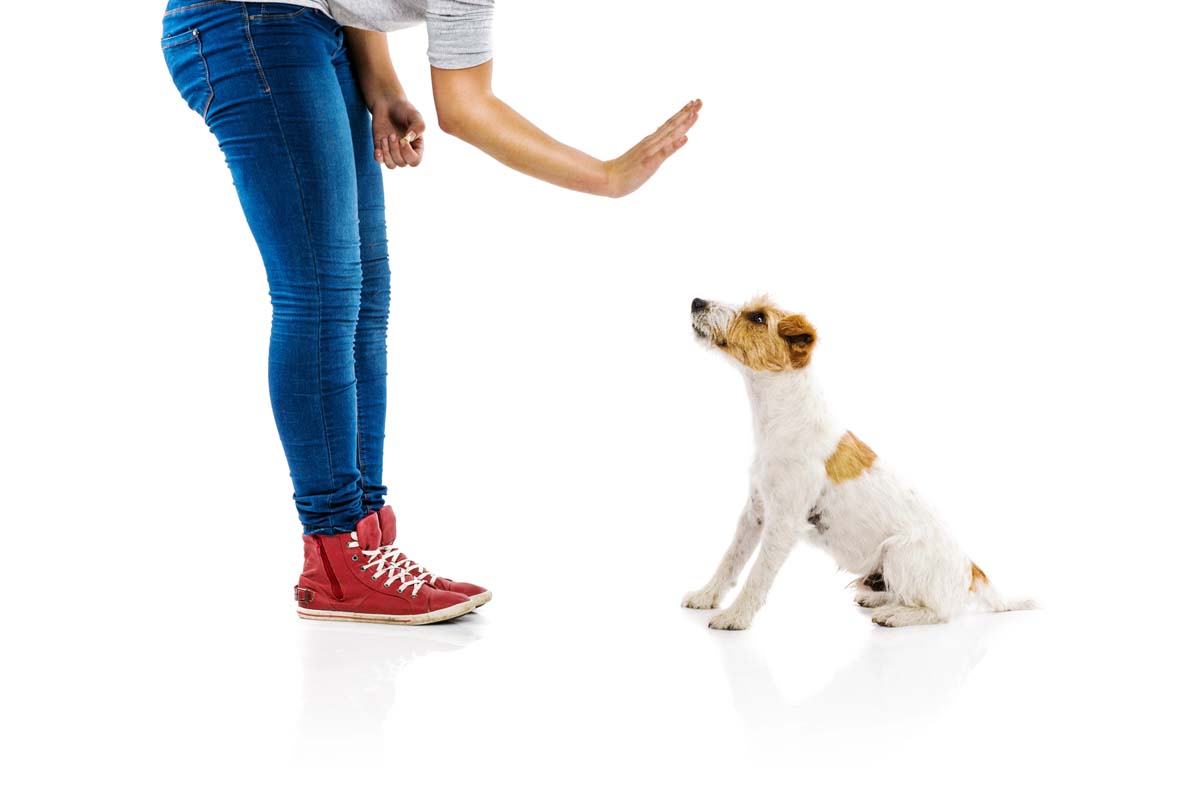
When the desired greeting gets rewarded consistently, jumping loses its power.
Example: Teach “Sit” as a Default Greeting
Practice:
- Sit before petting
- Sit before doors open
- Sit before greetings
Over time, your dog learns that sitting makes people appear, not jumping.
Reward Calm Behavior Early
Timing matters.
Watch for moments when your dog:
- Keeps four paws on the floor
- Pauses instead of jumping
- Chooses to sit or wait

Reward these moments immediately.
Read about why Positive Reinforcement is the key to a well-trained dog.
Remove Attention When Jumping Happens
If jumping occurs:
- Turn away
- Fold arms
- Avoid eye contact
- Stay quiet
The moment paws return to the floor, reward calmness.
Consistency is key.
Train With Controlled Setups
Don’t wait for random guests.
Practice with:
- Family members
- Friends who can follow instructions
- Repeated short sessions
Structured repetition builds reliable habits faster.
Gradually Increase Distractions
Progress slowly:
- Calm people → excited people
- Familiar faces → new guests
- Quiet environments → busier settings
This prevents regression and ensures success in everyday life.
Remain Calm
It’s essential to remain calm and patient when addressing the behavior, as getting frustrated or angry can worsen the problem.
What Not to Do—Common Mistakes
| Mistake | Why It Backfires |
| Pushing dog away | Feels like play |
| Yelling or scolding | Adds excitement |
| Pushing dog’s chest | Increases stress |
| Inconsistent rules | Confuses learning |
| Allowing some people to allow jumping | Reinforces behavior |
Don’t Shout or Punish Your Dog

It is very important to avoid shouting or punishing your dog for jumping, as this may worsen the behavior and damage your relationship with your furry companion. Instead, use positive reinforcement techniques, such as rewarding your dog for calm behavior, to encourage them not to jump on people.
Watch Out During Busy Seasons
Any time routines change—guests visiting, schedules shifting, or social activity increasing—dogs may struggle with impulse control.
Periods with more foot traffic in and out of the home often highlight greeting issues. That’s why addressing jumping proactively helps prevent awkward or unsafe situations later.
If you’re expecting visitors and your dog isn’t quite there yet, temporary boarding can be a helpful option while you work on training. Choosing a program like Desert Sky K9 Boarding and Training Bootcamp allows your dog to receive structured training alongside boarding, so they return home with improved manners—not just time passed.
How Long Does It Take to Stop Jumping?
It depends on:
- How long the behavior has existed
- How consistent the household is
- The dog’s age and temperament
- Training frequency
Some dogs improve in days, others take weeks, but consistency always wins.
When Professional Training Makes a Big Difference
Jumping can be harder to fix when:
- Dogs are large and/or strong
- Kids or seniors are involved
- Guests feel unsafe
- The dog ignores owner cues

Professional training helps:
- Identify reinforcement patterns
- Teach timing and technique
- Create customized behavior plans
- Reduce frustration for everyone
Key Takeaways
- Jumping is a learned behavior—not defiance
- Dogs jump because it brings attention
- Teaching alternatives works better than punishment
- Consistency from everyone matters
- Professional support speeds results and reduces stress
Final Thoughts
Your dog’s enthusiasm comes from a good place—but clear boundaries help channel that affection in a way that makes everyone feel comfortable and welcome. With patience, consistency, and the right training, your dog can keep their loving personality while developing the manners that make them a confident, well-behaved companion.
If jumping hasn’t improved at home, professional support can make the difference. Our certified trainers work directly with your dog in a structured training environment, building the impulse control and skills needed for calm, reliable greetings. Schedule your free, no-obligation consultation today and take the first step toward lasting results.
Frequently Asked Questions
Different reactions reinforce behavior differently—even unintentionally
No. Mixed rules confuse dogs and slow progress.
No. Jumping is driven by excitement and reinforcement, not dominance.
Yes—early puppy training makes a big difference.
Most dogs don’t without guidance.