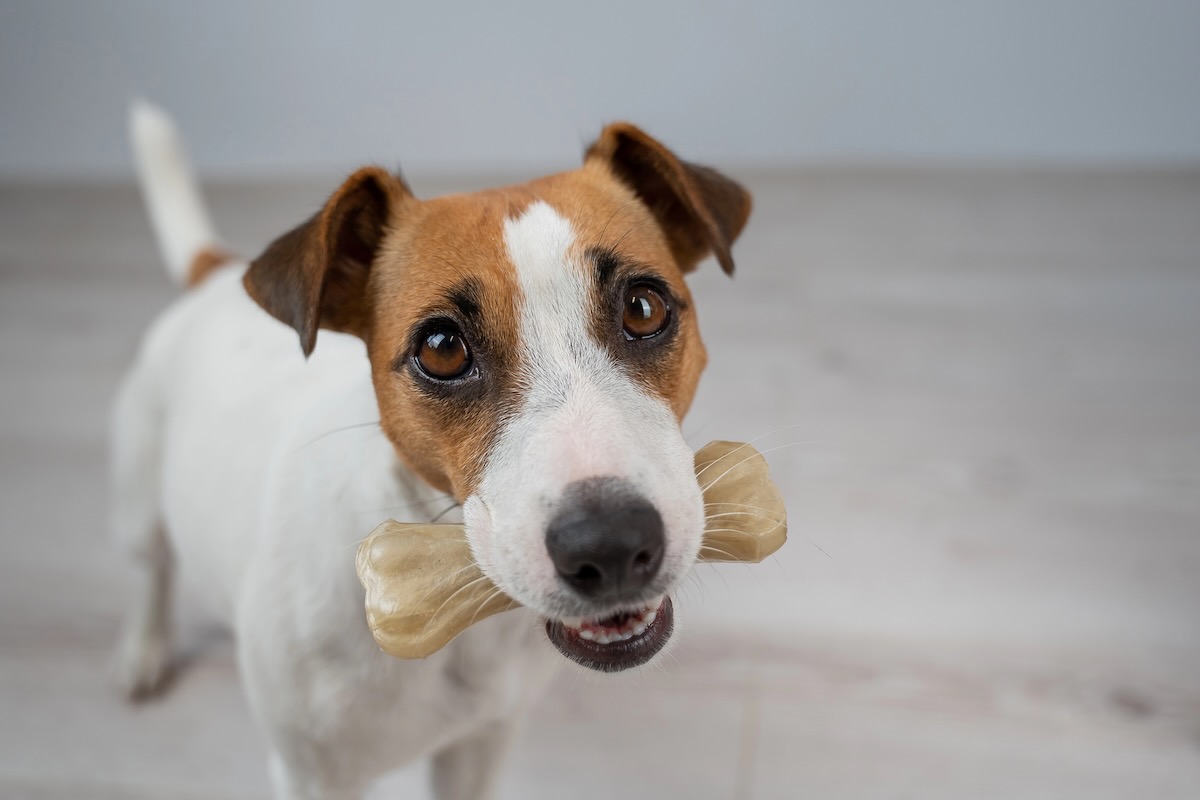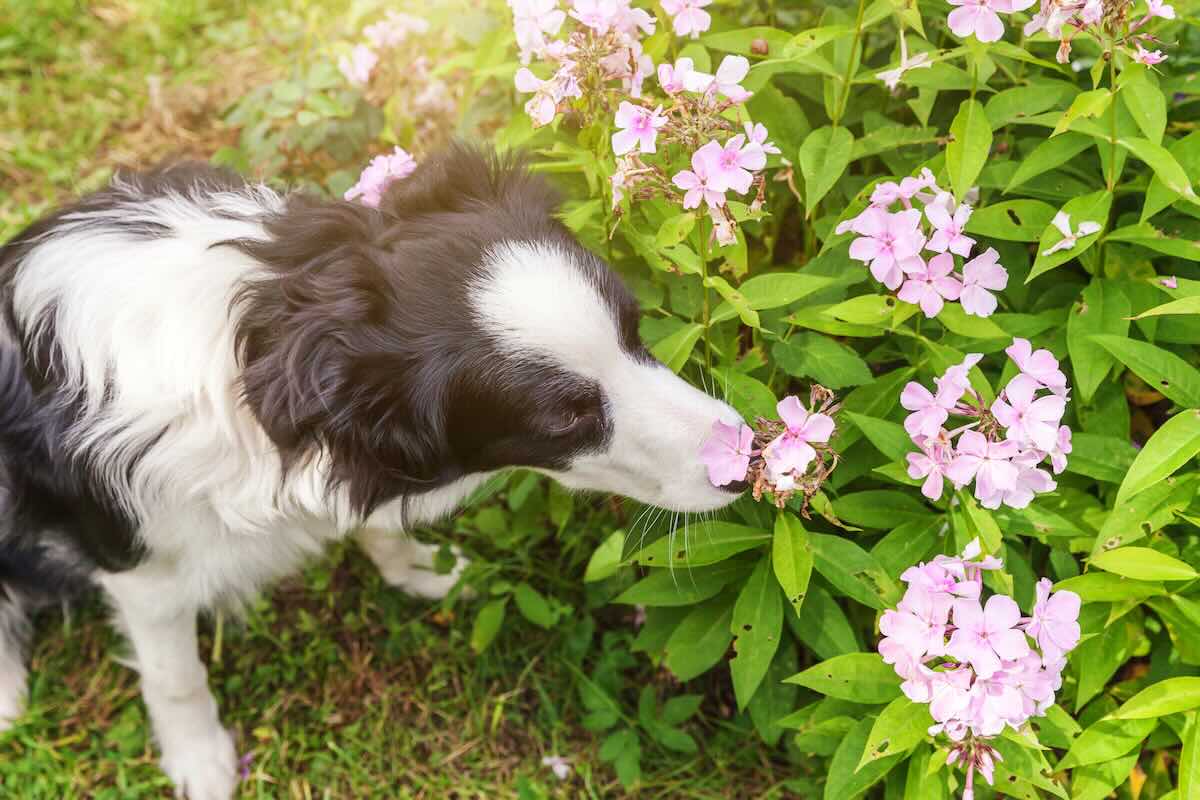
Making your own dog treats is an easy way to control ingredients, avoid unnecessary additives, and create healthy rewards your dog loves. The best homemade dog treats use simple, dog-safe ingredients like pumpkin, oats, bananas, eggs, and xylitol-free natural peanut butter. While homemade treats can be a nutritious alternative to many store-bought options, they should be fed in moderation and complement—not replace—a complete and balanced diet.
Ready to get baking? Whether you’re making treats for training, rewarding good behavior, or simply spoiling your best friend, here’s everything you need to know about choosing safe ingredients, making healthy homemade dog treats, storing them properly, and using them as part of a healthy lifestyle.
At a Glance
- Homemade dog treats let you control every ingredient.
- Always use natural peanut butter that contains NO xylitol.
- Pumpkin, oats, bananas, sweet potatoes, and lean meats are excellent ingredients.
- Many homemade dog treat recipes can be prepared in less than 30 minutes.
- Store treats in an airtight container.
- Limit treats and snacks to no more than approximately 10% of a pet’s daily caloric intake.
- Homemade treats can be excellent rewards during positive reinforcement training.
Why More Dog Owners Are Making Homemade Dog Treats
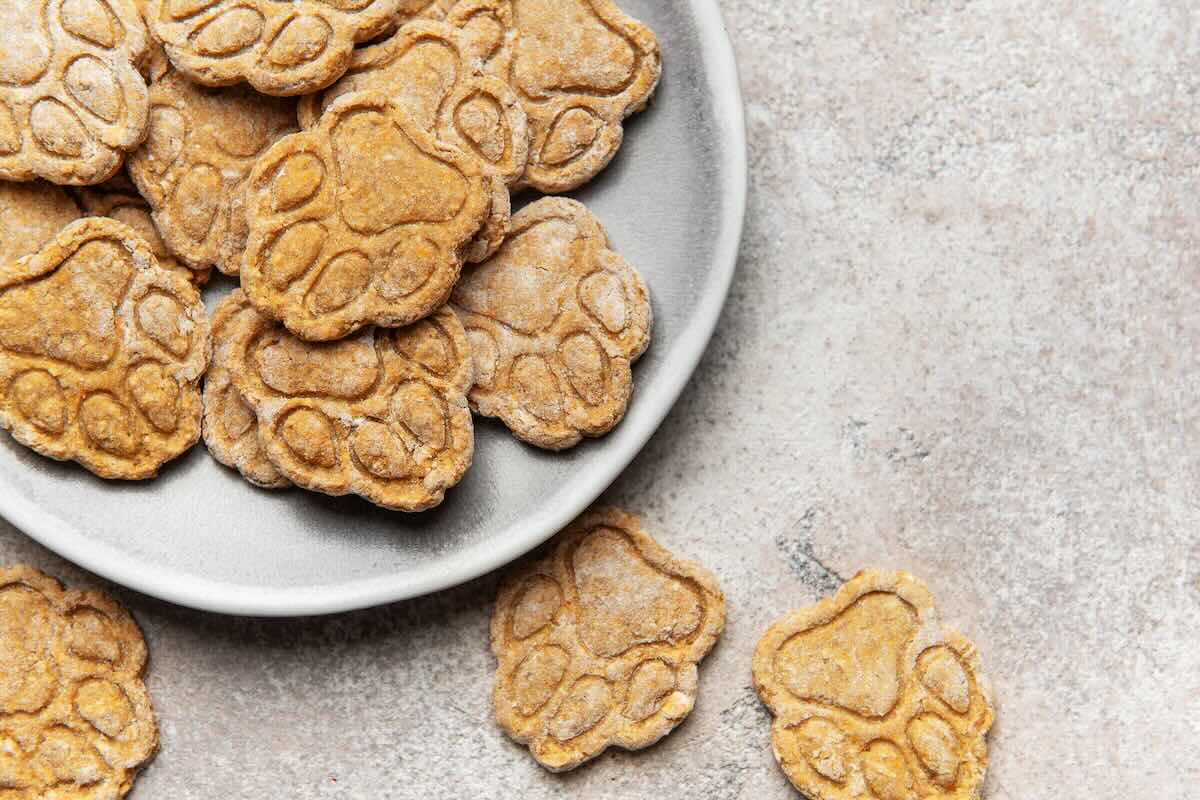
More pet parents are paying closer attention to what goes into their dog’s bowl—and their treat jar.
Just like people are reading nutrition labels more carefully, many dog owners are choosing homemade dog treats because they want fewer preservatives, recognizable ingredients, and more control over what their furry friend eats.
Whether your dog has food sensitivities, you’re looking for healthier rewards during training, or you simply enjoy cooking, homemade treats are an easy way to spoil your pup while knowing exactly what’s inside every bite.
Best of all, most recipes require only a handful of pantry staples.
That means you can often make a fresh batch in less time than it takes to drive to the pet store.
Are Homemade Dog Treats Better Than Store-Bought Treats?
Sometimes. The biggest advantage is ingredient control.
Many quality commercial treats are perfectly healthy, but others contain:
- Artificial colors
- Artificial preservatives
- Excess sodium
- Added sugars
- Low-quality fillers
- Unnecessary flavorings
Homemade treats also make it easier to avoid ingredients your individual dog may be sensitive to while giving you complete control over portion size and recipe ingredients.
Homemade vs. Store-Bought Dog Treats
| Homemade Treats | Store-Bought Treats |
| You control every ingredient | Ingredients vary by brand |
| No unnecessary preservatives | May contain preservatives |
| Can be customized for allergies | Limited customization |
| Budget-friendly | Convenient |
| Fresh ingredients | Longer shelf life |
| Great for training | Some are too large or calorie-dense |
What Ingredients Are Safe for Homemade Dog Treats?

Many healthy foods already in your kitchen make excellent dog treats.
Excellent Ingredients
- Oats
- Oat flour
- Whole wheat flour (if tolerated)
- Coconut flour
- Pumpkin puree
- Sweet potatoes
- Bananas
- Eggs
- Plain Greek yogurt
- Apples (without seeds)
- Blueberries
- Carrots
- Green beans
- Lean chicken
- Lean turkey
- Lean beef
- Salmon
- Coconut oil (small amounts)
- Xylitol-free natural peanut butter
Ingredients to Avoid
Never include:
- Xylitol
- Chocolate
- Grapes
- Raisins
- Onions
- Garlic
- Macadamia nuts
- Alcohol
- Raw bread dough
- Excess salt
- Excess sugar
- Artificial sweeteners
The U.S. Food and Drug Administration warns that xylitol is extremely toxic to dogs and can rapidly cause hypoglycemia, seizures, liver failure, and death.
According to the American Animal Hospital Association (AAHA), grapes and raisins are extremely toxic to dogs and can cause kidney failure. Because individual dogs may react differently—even to small amounts—these fruits should always be kept out of reach.
Before You Start Baking
Before trying any homemade dog treats, remember these three simple rules:
- Introduce new ingredients one at a time.
- Keep treats small, especially during training sessions.
- If your dog has food allergies or a medical condition, check with your veterinarian before making significant dietary changes.
- Supervise your dog whenever introducing a new chew or treat.
How Do You Choose a Good Homemade Dog Treat Recipe?
There are countless homemade dog treat recipes, but not all of them are created equal.
When choosing a recipe, look for one that:
- Uses dog-safe ingredients.
- Avoids xylitol, chocolate, grapes, raisins, onions, garlic, and excessive salt or sugar.
- Provides clear storage instructions.
- Makes appropriately sized treats for your dog’s size and activity level.
If your dog has food allergies or a medical condition, ask your veterinarian before trying a new recipe.
Fresh Ingredients at a Glance
Most Popular Ingredients
| Ingredient | Why Dogs Love It | Good Source Of |
| Pumpkin | Naturally mild flavor | Fiber & Vitamin A |
| Banana | Naturally sweet | Potassium |
| Oats | Gentle on digestion | Soluble fiber |
| Sweet potato | Chewy texture | Beta carotene |
| Chicken | High-value reward | Lean protein |
Which Flour Is Best?
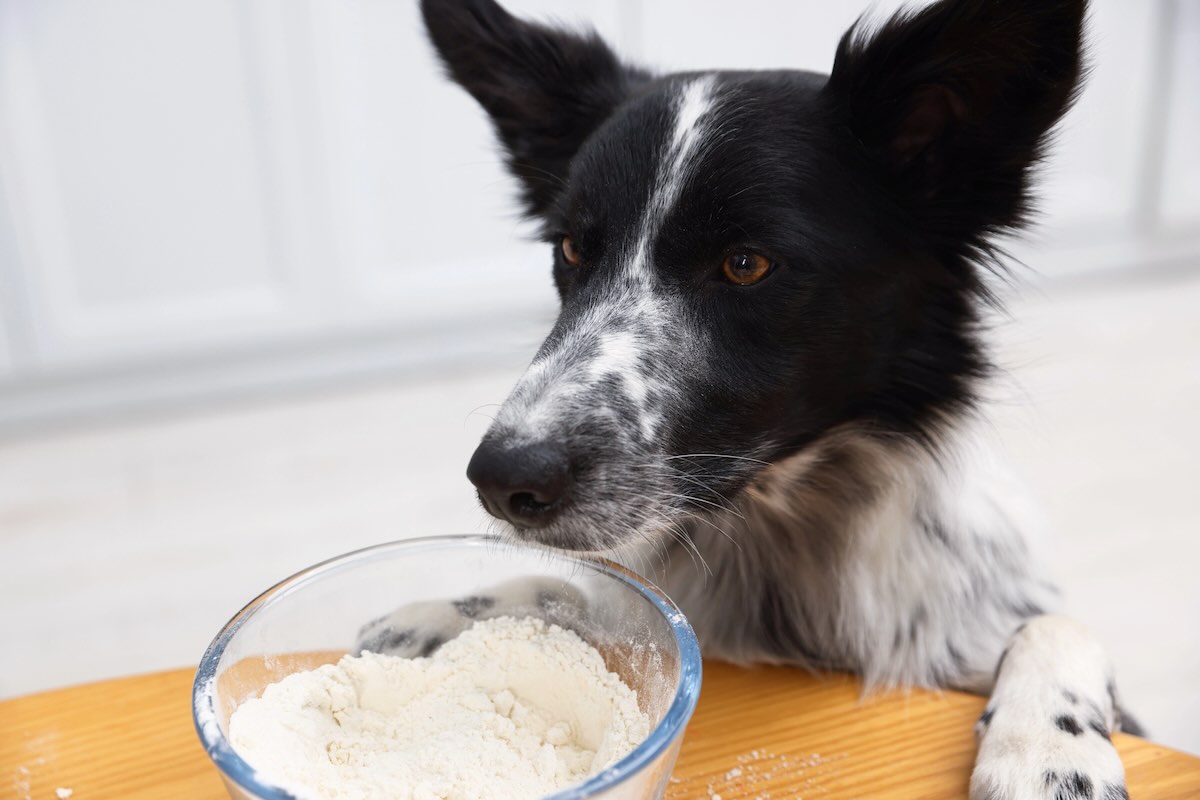
Different recipes call for different flours.
| Flour | Best For |
| Oat flour | Gluten-sensitive dogs |
| Whole wheat flour | General recipes |
| Coconut flour | Grain-free recipes |
| Brown rice flour | Gluten-free baking |
What About Peanut Butter?
Peanut butter is one of the most popular ingredients in homemade dog treats because many dogs love its taste. However, always read the ingredient label carefully. Choose a natural peanut butter that contains no xylitol, since even small amounts can be life-threatening to dogs according to the U.S. Food and Drug Administration.
Always check the label.
Choose:
- Natural peanut butter
- No xylitol
- No artificial sweeteners
- Minimal added sugar
- Minimal added oils
Even healthy peanut butter is calorie-dense, so moderation matters. When using peanut butter in homemade treats, a little goes a long way.
Can Dogs Eat Coconut Oil?
Small amounts of coconut oil can be used in homemade treats.
It may improve texture and flavor.
However, because coconut oil is high in fat, use it sparingly.
Too much dietary fat may contribute to digestive upset in some dogs.
How Many Homemade Treats Can Dogs Eat?
There’s no one-size-fits-all answer. The right amount depends on your dog’s size, activity level, and daily calorie needs.
The American Animal Hospital Association recommends limiting treats and snacks to no more than approximately 10% of a pet’s daily caloric intake to help maintain a healthy weight.
As a general guideline:
Small dogs
2–4 small treats daily
Medium dogs
4–8 treats daily
Large dogs
6–12 treats daily
Adjust portions based on activity level, age, and your veterinarian’s recommendations.
How Should You Store Homemade Dog Treats?
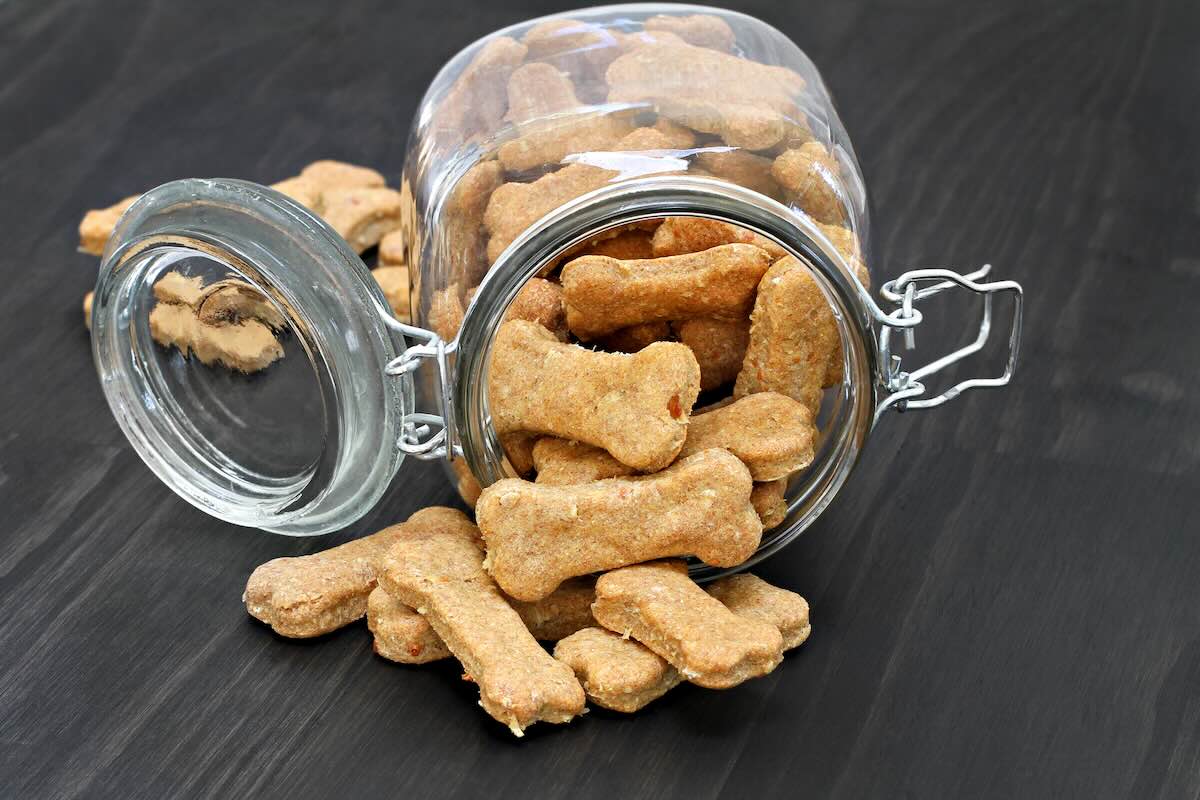
Storage depends on the ingredients.
Treat Storage Guide
| Storage Method | Shelf Life |
| Airtight container on counter | 3–5 days |
| Refrigerator | Up to 2 weeks |
| Freezer | 6–8 months |
Always allow treats to cool completely before storing.
Moisture trapped inside containers can shorten shelf life.
Common Homemade Dog Treat Mistakes
Avoid these common mistakes:
- Using peanut butter containing xylitol
- Making treats too large for training
- Overfeeding treats
- Forgetting to refrigerate moist recipes
- Trying several new ingredients at once
- Assuming “natural” always means safe
- Ignoring food allergies
- Replacing balanced meals with treats
Should Dogs With Allergies Eat Homemade Treats?
Sometimes homemade treats make it easier to avoid ingredients your dog doesn’t tolerate.
However, if your dog has diagnosed food allergies or medical conditions, always consult your veterinarian before introducing new foods.
Introduce one new ingredient at a time and monitor for digestive upset or skin reactions.
Can Homemade Dog Treats Save Money?
Besides giving you more control over ingredients, homemade treats can also be surprisingly budget-friendly.
Many recipes use inexpensive pantry staples like:
- oats
- bananas
- pumpkin
- eggs
- sweet potatoes
One batch often produces 30 to 40 treats, making homemade recipes considerably less expensive than premium store-bought treats.
Of course, convenience still matters. Commercial treats are shelf-stable and ready to use, making them a practical choice for many busy families.
For many owners, the best solution is a combination of both: healthy homemade treats at home and quality commercial treats for travel and training on the go.
Buying ingredients in bulk and making larger batches to freeze can make homemade treats even more economical over time.
Homemade Treats Are Great for Training
Did You Know?
Training treats don’t have to be fancy—they have to be valuable.
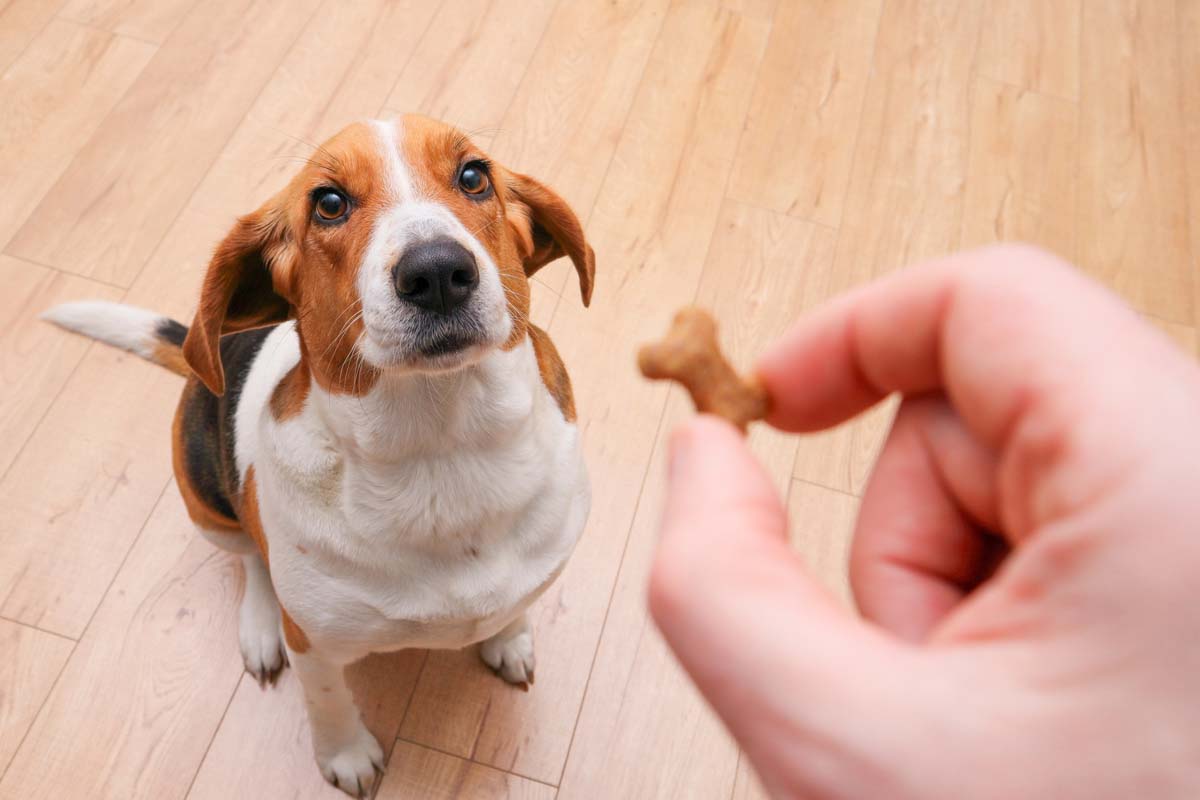
Professional trainers often recommend using small, soft, easy-to-eat treats during training sessions because dogs can eat them quickly and stay focused on learning instead of chewing.
At Desert Sky K9, positive reinforcement training means rewarding dogs for making good choices. Tiny homemade treats can become powerful motivators.
Learn more about our positive reinforcement philosophy on our Why Train With Us page.
Small, bite-sized homemade treats are excellent for reinforcing:
- Sit
- Down
- Stay
- Come
- Leave It
- Loose-leash walking
- Polite greetings
- Recall
At Desert Sky K9, we use positive reinforcement to help dogs build confidence while learning practical, real-world skills.
Whether you’re raising a puppy or working with an adult dog, rewarding good choices consistently is one of the fastest ways to build lasting behaviors.
Learn more about our:
Homemade Treats Are Only One Piece of Good Nutrition
Treats should never replace a complete diet. Your dog’s primary nutrition should come from a balanced dog food formulated for their life stage.
The World Small Animal Veterinary Association recommends feeding complete and balanced diets that have undergone appropriate nutritional formulation and quality control, with treats used only as a supplement.
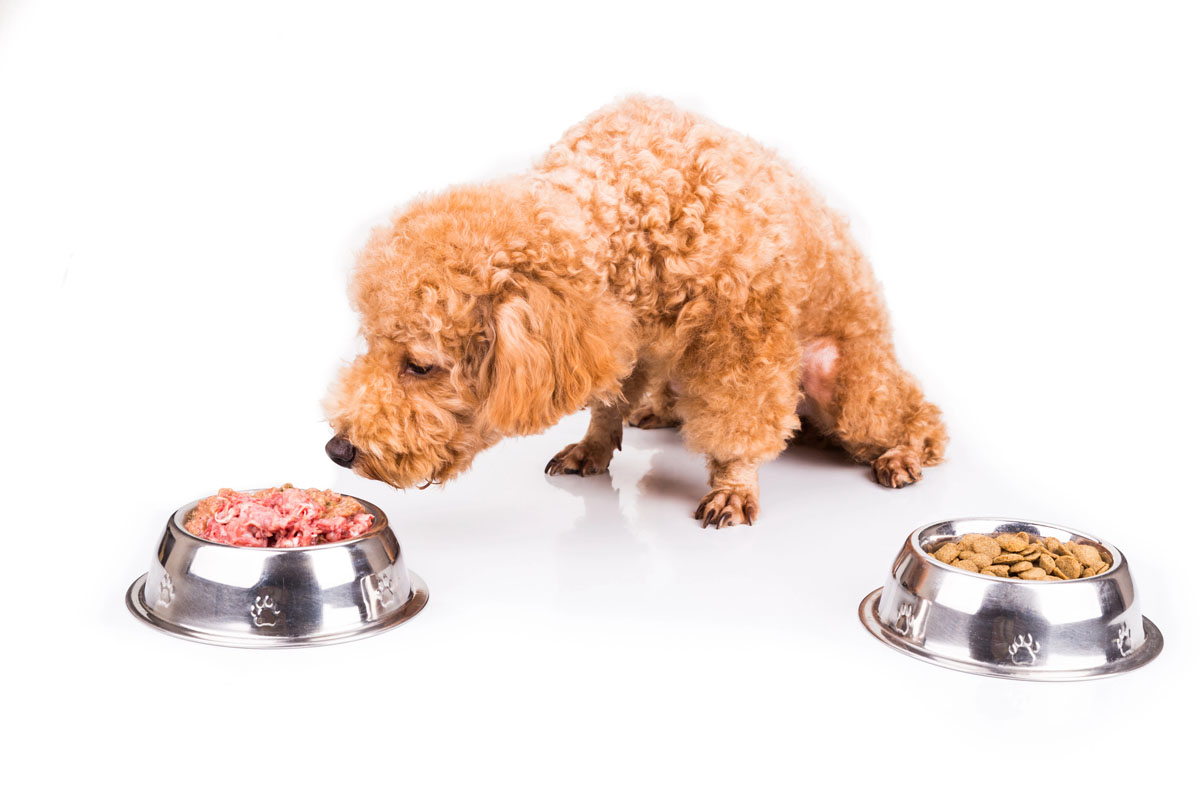
If you’re interested in learning more about the role fresh, whole foods can play in your dog’s overall nutrition, check out our guide, Why Real Dog Food Is the Best for Your Dog’s Behavior and Health. It explores how real, minimally processed ingredients can support your dog’s health while still providing the balanced nutrition they need.
Key Takeaways
- Homemade dog treats can be healthier than many commercial treats because you control the ingredients.
- Choose whole-food ingredients and avoid artificial sweeteners, excess salt, sugar, and preservatives.
- Natural peanut butter is safe only if it does not contain xylitol.
- Keep treats small during training so your dog stays motivated without consuming too many calories.
- Homemade treats should supplement a balanced diet—not replace complete dog food.
- Store treats properly to keep them fresh and safe.
Give Your Dog Healthy Rewards—and Great Training
Making your own dog treats is a fun way to show your dog some extra love while giving you complete control over the ingredients.
Healthy treats are only one piece of the puzzle. A balanced diet, regular exercise, mental enrichment, and positive reinforcement all play important roles in helping your dog live a happy, healthy life.
At Desert Sky K9, we’ve spent more than 30 years helping Phoenix-area dogs become calm, confident companions through humane, positive reinforcement training. Whether you have a brand-new puppy, an energetic adolescent, or a dog struggling with behavior challenges, we’re here to help you build a stronger relationship—one reward at a time.
Healthy homemade treats are a great start—but they’re just one part of raising a happy, well-behaved dog. Whether you need puppy training, help with behavior challenges, or guidance using positive reinforcement, Desert Sky K9 is here to help.
Schedule your free, no-obligation consultation today.
Frequently Asked Questions
They can be. Homemade treats allow you to control ingredients and avoid unnecessary additives, but they’re only healthy when made with dog-safe ingredients and fed in moderation.
Yes, as long as the treats are soft, appropriately sized, and made with puppy-safe ingredients. Keep portions small during training.
Yes—but only if it contains no xylitol. Always read the ingredient label carefully.
Absolutely. Most baked treats freeze well for several months when stored in airtight freezer containers.
Some of the simplest homemade dog treats use just a few wholesome ingredients, such as pumpkin, oats, bananas, sweet potatoes, or plain Greek yogurt. Look for recipes made with dog-safe ingredients and avoid those containing xylitol, chocolate, grapes, raisins, onions, garlic, or excessive salt and sugar.
Depending on ingredients, homemade treats generally last:
3–5 days on the counter
Up to 2 weeks refrigerated
Up to 6–8 months frozen
No. Homemade treats should be occasional rewards and should never replace a complete, balanced diet.
Small, soft, high-value treats that dogs can eat quickly work best. Tiny pieces of homemade chicken or small pumpkin treats are excellent choices.
Not necessarily.
Dogs do not automatically benefit from grain-free diets, and grain-free recipes should only be used when recommended by your veterinarian for a specific medical reason. Many dogs digest wholesome grains such as oats and brown rice perfectly well.
Absolutely.
Older dogs often benefit from softer homemade treats made with ingredients like pumpkin, bananas, or cooked sweet potatoes. Adjust texture and portion sizes based on your dog’s dental health and consult your veterinarian if your senior dog has medical conditions requiring dietary restrictions.